Indian
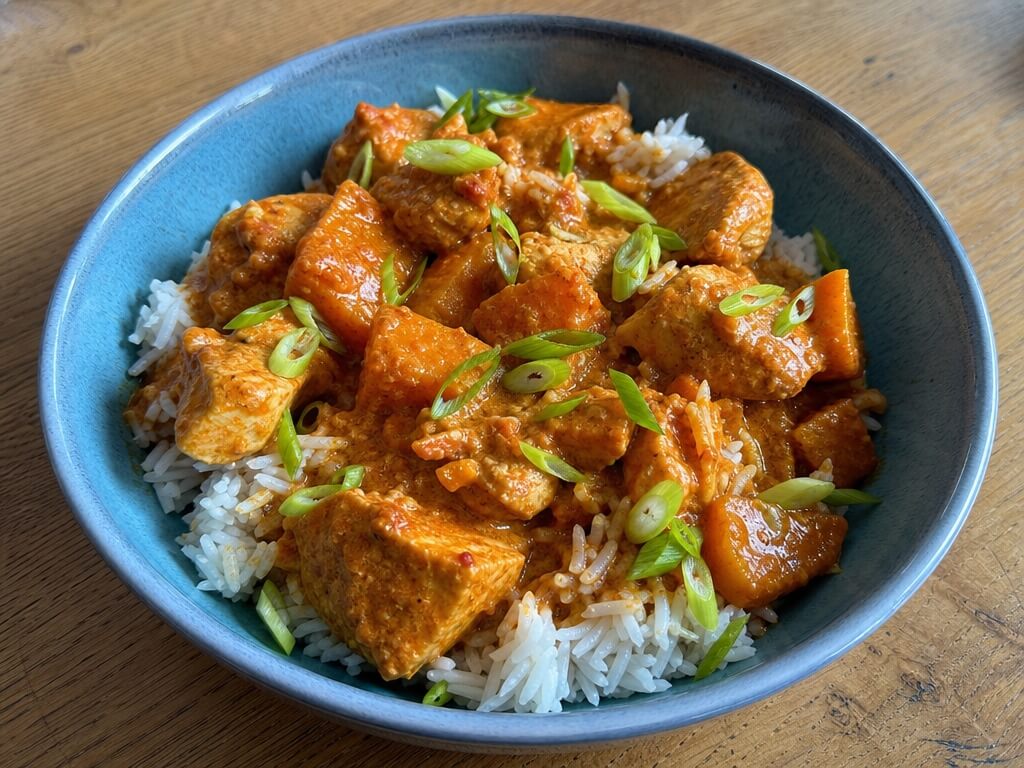
Tandoori Chicken Thigh Curry with Roasted Butternut Squash and Basmati Rice
A weeknight curry built on diced chicken thigh, tandoori masala spice and a splash of soured cream, served over steamed basmati with golden roasted squash stirred through at the end.
- Prep
- 10 min
- Cook
- 30 min
- Serves
- 2
- Difficulty
- Easy
Published 5 Aug 2026
Method
-
1
Heat the oven to 220°C (200°C fan). Trim the butternut squash, halve it lengthways and scoop out the seeds. Cut it widthways into 1cm slices, then into 1cm chunks. There is no need to peel it. Spread the chunks on a baking tray, drizzle with oil, season with salt and pepper and toss to coat. Arrange in a single layer and roast on the top shelf for 25-30 minutes, turning halfway, until soft and golden at the edges.
-
2
Pour 300ml of water into a saucepan and bring to the boil. Add 1/4 tsp of salt, stir in the basmati rice and lower the heat to medium. Put a lid on the pan and cook for 10 minutes. Remove from the heat, still covered, and leave undisturbed for a further 10 minutes. The rice will finish cooking in its own steam.
-
3
While the squash and rice cook, heat a drizzle of oil in a frying pan over a medium-high heat. Add the diced chicken thigh, season with salt and pepper and cook for 4-5 minutes, stirring occasionally, until browned on the outside. The chicken does not need to be fully cooked through at this stage.
-
4
Meanwhile, halve, peel and thinly slice the red onion. Peel and finely grate the garlic. Trim and thinly slice the spring onions and set them aside. Once the chicken is browned, add the red onion to the pan and cook, stirring occasionally, for 5-6 minutes until softened.
-
5
Add the grated garlic and tandoori masala spice to the pan. Stir and cook for 1 minute. Add the tomato puree, 250ml of water and the chicken stock powder. Bring to the boil, then reduce the heat to medium and simmer for 5-6 minutes until the sauce has reduced by roughly half. Add the baby spinach in handfuls, stirring it through each time, and cook for a further 2-3 minutes until wilted. Take the pan off the heat and stir in the soured cream until fully combined.
-
6
Add the roasted squash to the curry and stir everything together. Warm through on a low heat if needed, adding a splash of water if the sauce is too thick. Taste and adjust the seasoning. Divide the rice between bowls, spoon the curry on top and scatter with the sliced spring onions.
Cook’s note
About this recipe.
The soured cream goes in off the heat at the very end. Adding it while the pan is still on a high flame can cause it to split and turn grainy, so take the pan off the hob first, stir it through, then check the seasoning. The roasted squash is added last too, which keeps the pieces intact rather than breaking them down into the sauce.
Cook with confidence
Tips for the best result.
- To keep the rice light and separate, resist lifting the lid during the 10-minute cooking time. The steam does the work.
- If the sauce reduces too quickly before the chicken is cooked through, add a small splash of water to loosen it.
- Check the chicken is fully cooked by cutting into a piece. There should be no pink flesh remaining in the centre.
Substitutions
- Diced chicken breast can be used in place of chicken thigh, though the sauce will be slightly less rich. Reduce the browning time slightly as breast dries out faster.
- Natural yoghurt stirred in off the heat is a reasonable stand-in for soured cream, giving a lighter, tangier finish.
- Frozen spinach works well. Thaw and squeeze out excess water before adding it to the pan.
Variations
- Swap the butternut squash for cubed sweet potato, roasted at the same temperature for a similar time.
- Add a handful of canned chickpeas to the sauce in step 5 for extra bulk and a vegetable-only version (omitting the chicken).
Common questions.
Can I use a whole butternut squash rather than a small one?
Yes. Use roughly half a medium squash for two portions. Cut it into 1cm chunks as described and roast in a single layer so it colours rather than steams.
Why does the rice cook off the heat at the end?
After 10 minutes of gentle simmering, the rice is nearly done. Leaving it covered off the heat for a further 10 minutes lets the residual steam finish cooking it without the risk of the bottom catching or the grains becoming waterlogged.
How much tandoori spice should I use if I prefer less heat?
Start with half the stated quantity and taste the sauce before adding more. Tandoori masala blends vary in heat level, so it is worth adjusting to your own preference.